Fifa President Gianni Infantino is facing increased scrutiny after the organization’s chief operating officer, Kevin Lamour, strongly criticized his plan to sell stakes in competitions to private investors. In a statement, Lamour described the plan as “the project of one person” and called on football’s political leaders to ask themselves the right questions and make the right decisions. He also stated that Fifa’s administration was “deceived” about the project.
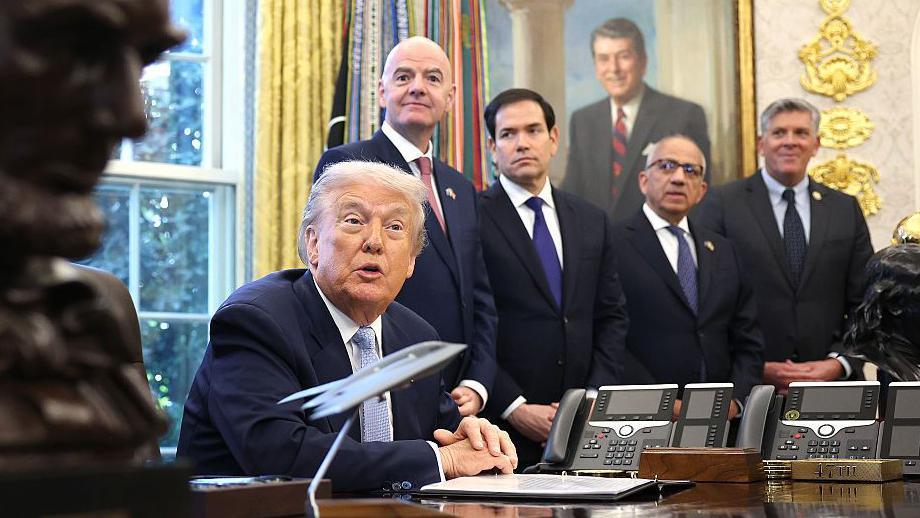
Lamour’s statement did not mention Infantino by name, but it came on the same day that a third confederation spoke out against the plans, a senior adviser to Infantino resigned, and Prime Minister Andy Burnham said that Infantino was “the wrong man” to lead Fifa. US President Donald Trump, who has developed a close relationship with Infantino since taking office in 2025, said that he had not spoken to Infantino about the plans.
Lamour emphasized that his mission, and that of his colleagues, is to serve football, and that a president must bring people together, unite them, and inspire them. He acknowledged that he had a duty of loyalty to his employer, but also to certain values and to supporting his colleagues. He stated that if his actions meant he would lose his job, then so be it, as he would at least be able to sleep well at night.
The Asian Football Confederation (AFC) had earlier stated that it “stands in solidarity” with its counterparts in Europe and North, Central America, and the Caribbean. The AFC expressed concerns that Infantino’s plan could not “realistically achieve the necessary broad consensus and unity required to move forward.” The confederation emphasized that the Fifa World Cup derives its strength from the participation of all confederations and the world’s leading football nations, and that any proposal that risks undermining the unity and universal character of the competition must be reconsidered.
Carlos Cordeiro, Infantino’s senior adviser on global strategy and governance, resigned shortly after the AFC’s statement, saying that the proposal was “a bad deal for football” and would “mortgage football’s future.” Cordeiro stated that he “unequivocally” opposed the plans and did not accept the proposition that Fifa needed outside investors to “unlock greater value.” He emphasized that Fifa’s responsibility is to protect and strengthen football for future generations, and that football must come first when principles come into conflict.
The AFC’s statement means that Infantino’s plans are unlikely to be approved by Fifa members if put to a vote. Uefa, the body that governs European football, has 55 votes, Concacaf has 35, and Asia has 46. If all member associations back the stance of their governing body, that would mean 136 nations are against Infantino’s plan.
Fifa’s plan involves creating a commercial subsidiary to run its main events, including the World Cups, and allowing external investors to buy stakes in it. The organization claims that this would increase pay-outs to member associations, but critics argue that it would undermine the unity and universal character of the competition. The proposal has been met with widespread criticism, with many governing bodies expressing concerns about the lack of consultation and the potential risks to the sport.
The reaction to the proposal has been intense, with Uefa voting to boycott World Cups if the plan proceeds, and Concacaf and AFC expressing their opposition. Fifa has vowed to continue with the plan, but the organization’s claim that the consultation process had been “disrupted by incorrect media reports” has been met with skepticism. The governing bodies in Africa and Oceania have said they will discuss Fifa’s plan in August, while Conmebol has initiated a consultation process with its member associations.
Despite the opposition from many governing bodies, it is possible that some “smaller” nations could still support Infantino’s plan. Many of these nations rely on Fifa funding for basic infrastructure, and any avenue that could lead to more resources could be seen as beneficial. However, the opposition from major governing bodies such as Uefa and the AFC makes it unlikely that the plan will be approved.
In Uganda, for example, numerous infrastructure projects have been funded by Fifa using resources generated from the organization, particularly from World Cup ticket sales and sponsorships. Additionally, Fifa has funded various grassroots programs, including football schools. From a personal standpoint, any opportunity that brings in more resources is beneficial, as these resources can be distributed to federations, especially on the African continent, which can foster growth.
Byamukama recognized Uefa’s right to express its opinions but pointed out that its members are not as reliant on Fifa funding as many associations worldwide, where Infantino remains popular. During the first two cycles of the Fifa Forward development program, which ran until 2022, $2.8 billion was made available for investment across the 211 member associations.
The updated Fifa Forward 3.0 program, covering the years 2023 to 2026, has resulted in a 30% increase in funding. Furthermore, Fifa has allocated an additional $5 million to each member association, with a further $60 million provided to each confederation for their individual projects. Following the expansion of the men’s World Cup from 32 to 48 teams for the 2026 edition, Fifa is currently seeking an independent agency to assess the feasibility of expanding the tournament to 64 teams for the 2030 edition.
According to documents obtained by BBC Sport, Fifa is expected to receive proposals from agencies by August 7, with a decision scheduled for August 14. The selected agency is then expected to deliver its analysis by September 11.
About The Author