
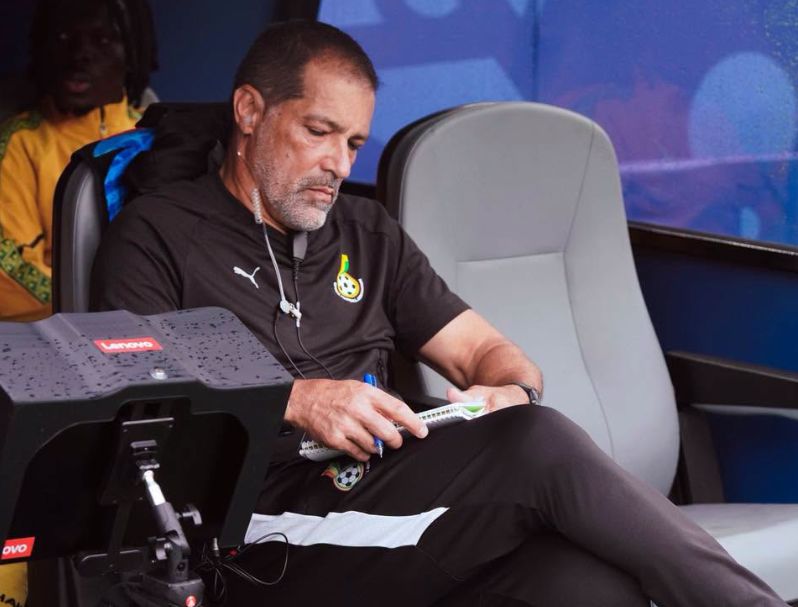
The 2026 FIFA World Cup has been characterized by Black Stars assistant coach Roger De Sa as an unforgettable and meticulously organized tournament, despite his acknowledgement that the exhaustive travel requirements across the vast expanse of North America imposed substantial physical and mental demands on the players.
The South African coach, who joined Ghana’s technical team prior to the commencement of the global football spectacle, played a pivotal role in the Black Stars’ campaign, which ultimately came to a close at the Round of 32 stage, thereby bringing an end to their participation in the tournament.
Ghana initiated their World Cup campaign on a resoundingly positive note, securing a narrow and hard-fought 1-0 victory over Panama, followed by a goalless draw against England in their second Group L fixture, which demonstrated the team’s resilience and determination.
However, a subsequent 2-1 defeat at the hands of Croatia in their final group match resulted in the Black Stars finishing third in the standings, a setback that could have potentially derailed their momentum. Nevertheless, Ghana managed to advance to the knockout stage, where their campaign ultimately came to an end with a 1-0 loss to Colombia, a defeat that marked the culmination of their World Cup journey.
In a reflective interview with KickOff, De Sa described the World Cup as a unique and enriching experience, lavishing praise on the organizers for delivering a high-quality competition that exceeded expectations.
According to De Sa, “World Cups are always special, and each one surpasses the previous in terms of quality and spectacle. The third one is even better, a testament to the organizers’ ability to learn and improve with each iteration.”
He further emphasized, “I thought it was a fantastic tournament, very well organized, with great stadiums, exceptional hotels, and an overall atmosphere that was electric. The crowds were phenomenal, and the stadiums were consistently full, creating an intoxicating environment that fueled the players’ passion and dedication.”
Despite his admiration for the tournament, De Sa astutely identified the long-distance travel between host cities and different time zones as the most significant challenge confronting participating teams, a factor that undoubtedly took a toll on the players’ physical and mental well-being.
As De Sa noted, “If there was one difficulty, I think it was the travel. The cities were often quite distant, spanning different time zones, which had a profound impact on all the teams, affecting their performance, morale, and overall cohesion.”
He further added, “The travel was undoubtedly taxing on the players, who had to endure the physical and mental strain of constant travel, a factor that cannot be overstated in its impact on their ability to perform at their best.”
With Ghana’s World Cup campaign now a distant memory, the Black Stars will redirect their focus towards the qualification race for the 2027 Africa Cup of Nations, a tournament that holds immense significance for the team and their fans.
Ghana has been drawn in Group C alongside formidable opponents Ivory Coast, Somalia, and The Gambia, with the qualifying campaign scheduled to commence in September, as the Black Stars embark on a quest to secure a return to Africa’s most prestigious football tournament, driven by their unwavering passion, dedication, and unrelenting pursuit of excellence.
About The Author