jemoh
jemoh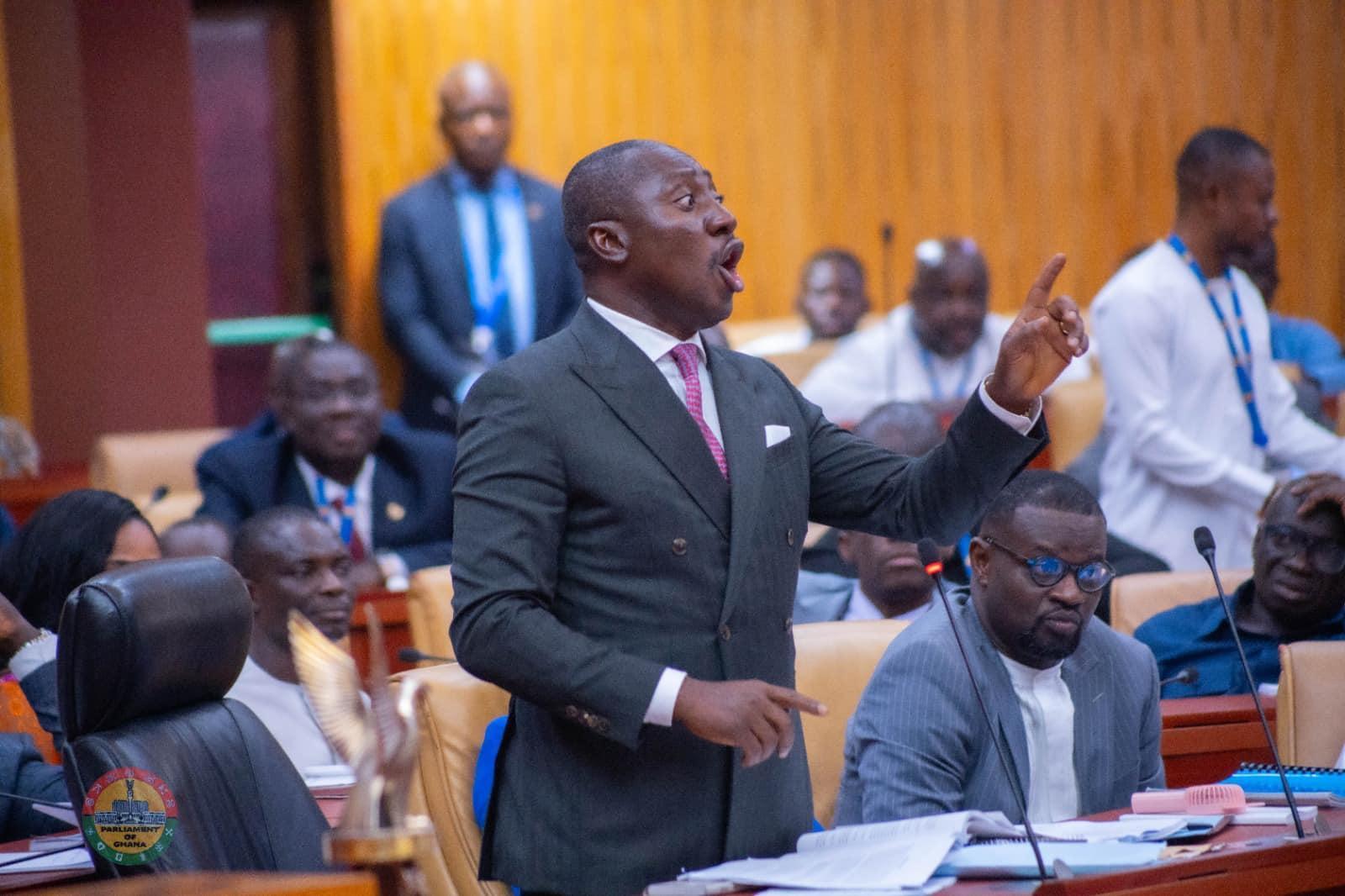
The Value for Money Office Bill, 2026’s minority caucus in Parliament has distanced itself from the procedures that led to its passing, cautioning that the proposed legislation would actually make corruption in the nation worse.
The Public Financial Management Act and the Public Procurement Act, among other current legal frameworks, the Caucus contended, already offer sufficient tools to guarantee validation and value for money in public spending.
It argued that the majority’s emphasis on passing the measure would result in an extra layer of bureaucracy that would be less effective at preventing corruption and more susceptible to political influence.
Therefore, rather than establishing a new office, it urged the government to reinforce current legislation.
“We, the minority, will not rubber-stamp the bill, and we, the mighty few, will wash our hands if the majority would not listen to these strong views and take them on board and instead bring amendments to existing laws and want to pursue the path of chop-chop,” the statement stated.
“Carry your burden by yourself.”
Alexander Afenyo-Markin, the minority leader, stated that the caucus would not participate in what he called a defective legislative process in his contribution to the motion for the House to discuss the bill following its second reading.
“We will not participate in this immoral act that would expose and weaken the state. Carry the load by yourself.
“We want to open the Pandora box, and if this law is passed, it will be the perfect conduit for corruption,” he stated.
- Kofi Adams responded to André Ayew’s return to the Black Stars by saying, “I am a minister, not the coach.”
- Stonebwoy: “Jejereje” helped the NDC win in 2024.
- AFCON championship dispute intensifies as Senegal goes to court following the CAF’s announcement of Morocco’s victory
- A minority opposes the Value for Money Bill, claiming it will “fuel corruption.”
- EDITOR’S LENS: TGMA27: Gospel brotherhood needs to look at the wider picture
The bill’s purpose
In order to improve efficiency, accountability, and openness in public spending and procurement, the bill aims to create a value for money office to oversee, monitor, coordinate, and encourage value-for-money evaluations.
Cassiel Ato Forson, the Minister of Finance, presented it to Parliament before sending it to the Finance Committee for review and report.
Independence-related concerns
According to Mr. Afenyo-Markin, the bill and the committee’s findings were opposed by minority members.
He added that the final report was not sufficiently reviewed by the ranking member before submission.
He maintained that institutions in nations like the United States and Canada are not subject to political control, rejecting the government’s claim that the measure is in line with worldwide best practices.
He contended that the proposed office’s independence would be questioned because its governing board would be predominantly composed of appointees chosen by the finance minister.
- Kofi Adams responded to André Ayew’s return to the Black Stars by saying, “I am a minister, not the coach.”
- Stonebwoy: “Jejereje” helped the NDC win in 2024.
- AFCON championship dispute intensifies as Senegal goes to court following the CAF’s announcement of Morocco’s victory
- A minority opposes the Value for Money Bill, claiming it will “fuel corruption.”
- EDITOR’S LENS: TGMA27: Gospel brotherhood needs to look at the wider picture
“Who does not know that before a minister makes an appointment, he will first look at loyalty to him,” he remarked, implying that the very corruption the finance minister sought to eradicate would fester?
For this reason, we are informing you about the Public Financial Management Act, the PPA Act itself, and the internal organizations found in public institutions that provide some degree of audit value.
“And external bodies of independent institutions are relied upon when certain levels of procurement are required, and why do we not look at this and strengthen where there are loopholes?” he asked.
“Walking contradiction”
The Minority Leader cautioned that the public would see the bill unfavorably and characterized the campaign for it as inconsistent.
He claimed that the establishment of the office might be seen as an additional opportunity for poor management.
He urged the government to cease becoming “a walking contradiction,” saying, “As political leaders, we must be careful about the impression.”
“We have a deputy chief of staff who owns a business, and the GoldBod would award an 11 million cedi sole contract; you are a walking contradiction because you have not yet fulfilled the promises that you made,” he remarked.
- Kofi Adams responded to André Ayew’s return to the Black Stars by saying, “I am a minister, not the coach.”
- Stonebwoy: “Jejereje” helped the NDC win in 2024.
- AFCON championship dispute intensifies as Senegal goes to court following the CAF’s announcement of Morocco’s victory
- A minority opposes the Value for Money Bill, claiming it will “fuel corruption.”
- EDITOR’S LENS: TGMA27: Gospel brotherhood needs to look at the wider picture
The government defends the bill
Thomas Nyarko Ampem, the Deputy Minister of Finance, denied allegations that the planned position would encourage corruption.
He clarified that by guaranteeing that every contract provides value for money, the program was meant to improve supervision.
He claimed that although the Public Procurement Authority makes sure that procedures are followed, it does not sufficiently address cost effectiveness.
It will guarantee post-contract verification, technical soundness, and life cycle costing.
He acknowledged the minority’s concerns, pointing out that, in contrast to many contracts that are competitively tendered, single-source procurements have historically undergone value-for-money evaluations.
He continued by saying that in the past, Ghana relied on outside organizations like the UK-based company Crown Agents to carry out these evaluations.
In actuality, we always relied on Crown Agents, a UK-based business, to conduct value for money for this nation.
“As of right now, Crown Agents have left this country, so there is no institution to provide this service, so it is timely that we have our own Value for Money Office to conduct value for money for procurements that we do in this country,” he stated.
Mr. Ampem went on to say that sole-source contracts were not the only ones with exorbitant costs.
“That is untrue because it is evident that competitive bidding contracts have been overcharged.
In fact, we have observed expense build-ups in our contracts that reflect contractors’ purchases of cell phones and airtime. Cost lines indicating the rental of hotel accommodations for contractors have been observed.
“It is untrue that only sole source or restricted tendering has been overpriced because all of these are competitive bid contracts,” he stated.