
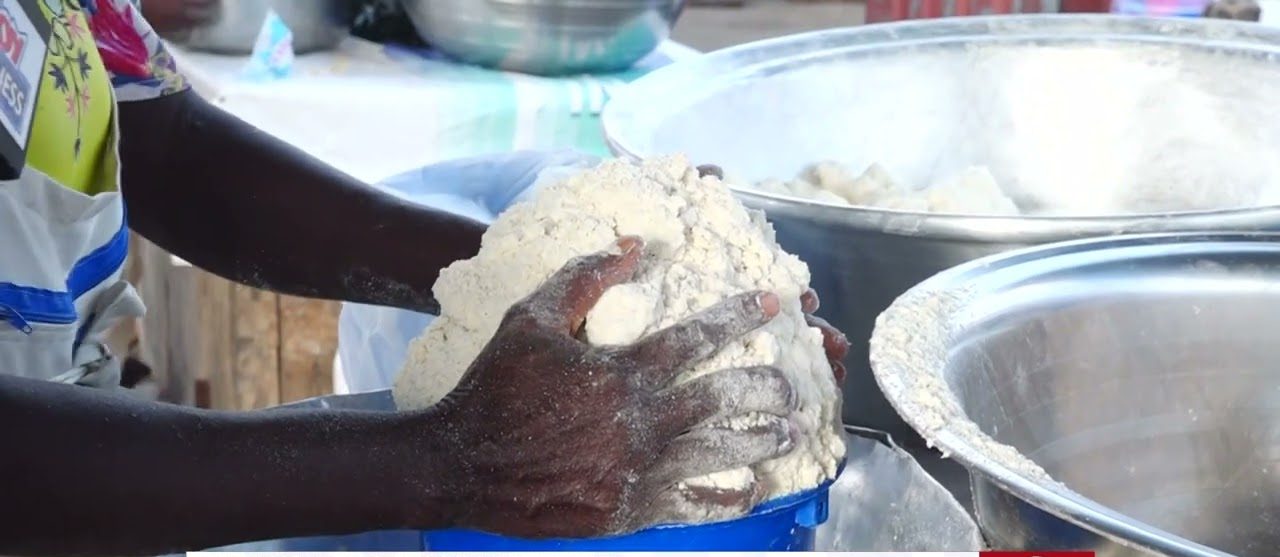
Women vendors at the Kaneshie Market have categorically refuted allegations that alum is being added to konkonte, a traditional Ghanaian staple, to alter its color. They have labeled these claims as unfounded and are urging consumers to seek accurate information regarding the product.
The traders assert that the varying hues of konkonte are not indicative of adulteration but are instead a natural occurrence influenced by several factors, notably the season during which cassava is harvested, processed, and dried. They elaborated that fluctuations in weather conditions and drying methods across different seasons can significantly affect the final appearance and coloration of konkonte.
In light of these concerns, the vendors implore consumers to remain calm when encountering konkonte with diverse shades, emphasizing that such variations are a normal part of the drying process. They stress that differences in color should not be hastily interpreted as signs of contamination.
These assertions come amidst growing public concern that alum is being utilized to achieve specific colorations in konkonte. The women of Kaneshie Market have dismissed these rumors and are advocating for enhanced public education on the traditional processing methods employed in creating this staple.
They further encourage consumers to verify information before jumping to conclusions or disseminating allegations that could incite fear and uncertainty within the community. The vendors warn that baseless claims could have detrimental effects on the livelihoods of those who rely on the production and sale of konkonte.
In a call to action, the market women have urged relevant authorities and stakeholders to provide clear, reliable information to the public regarding the proper processing and handling of konkonte in order to dispel any misinformation.
Additionally, they advise consumers who harbor concerns about the safety or quality of konkonte to consult appropriate food safety authorities, rather than relying on unverified assertions.
For these traders, the dissemination of accurate information is crucial not only for consumer safety but also for protecting the livelihoods of farmers, processors, and traders who depend on this local staple. They reiterated that the natural variation in the color of konkonte should not be a cause for alarm and urged the public to approach such claims with a discerning eye.
About The Author