
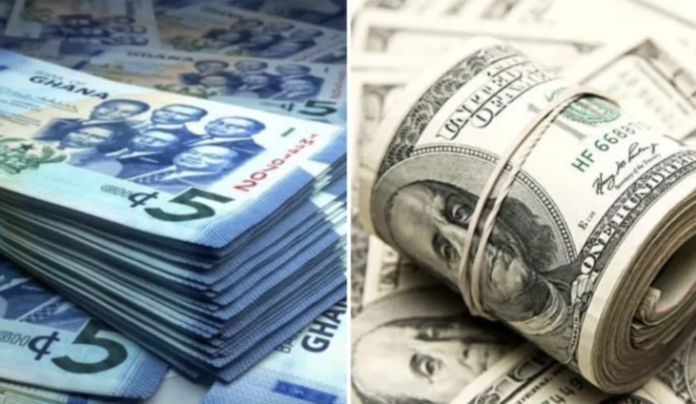
The cedi, in accordance to the cutting-edge market update, weakened in each the interbank and retail overseas trade markets, with analysts attributing the depreciation to heightened demand for US greenbacks amid reasonable overseas alternate supply.
The cedi traded at GHS 11.85 to the US dollar, down from GHS 11.63 recorded in the preceding overview duration in the interbank market and additionally depreciated in opposition to the British pound and the euro, with alternate fees rising to GHS 15.85 per pound and GHS 13.66 per euro from GHS 15.62 and GHS 13.49, respectively.
The depreciation used to be additionally felt in the retail market, with the cedi dropping 0.81 percentage towards the dollar, 1.83 percentage in opposition to the pound, and 1.40 percentage towards the euro, closing at mid-rates of GHS 12.30 per dollar, GHS 16.35 per pound and GHS 14.30 euro.
Despite the overseas trade interventions of about $1.1 billion by means of the Bank of Ghana in May, the cedi depreciated via an common of 4.18 percentage between April and May 2026, in contrast to the 3.23 percentage decline recorded at the give up of April.
According to a document by means of citinewsroom.com, analysts have attributed the weak point to demand for overseas foreign money persistently outpacing supply, compounded by using developing world urge for food for the US dollar as central banks liquidate non-dollar belongings to meet rising import fees pushed by way of constantly excessive crude oil prices.
Looking ahead, market observers count on hypothesis in the overseas alternate market to continue to be noticeably contained in June, supported by way of an introduced $1.2 billion month-to-month overseas change help programme.
Analysts, however, warn that the cedi should face extra stress in the coming weeks as multinational corporations commence repatriating income and dividends at some point of the second-quarter repatriation period.
“Corporate demand generally peaks at some stage in the Q2 repatriation window, pushed through multinational dividend and income outflows,” the document noted.
The dollar-cedi trade charge is anticipated to weaken in addition past the modern interbank degree of GHS 11.85 until overseas trade inflows reinforce significantly.
Meanwhile, in South Africa, the rand additionally got here below stress throughout the overview period, weakening via 1.15 percentage to shut at ZAR 16.28 per US dollar.
Analysts attributed the decline to extended oil fees and renewed geopolitical tensions that have dampened investor chance urge for food and extended issues over import costs.
The outlook for the rand stays cautious, with expanded crude oil costs and unsure international market stipulations predicted to hold the foreign money beneath strain in the close to term.
About The Author